
Cognitive Art History as New Humanities: How to Capture a Painter’s Brain?
The June and Simon Li Distinguished Lecture in the History of Art
Eugene Wang, Abby Aldrich Rockefeller Professor of Asian Art, Harvard University
5pm Wed 28 Oct 2026
Oakeshott Room, Lincoln College
(Free to attend)
Cognitive Art History as New Humanities: How to Capture a Painter’s Brain?
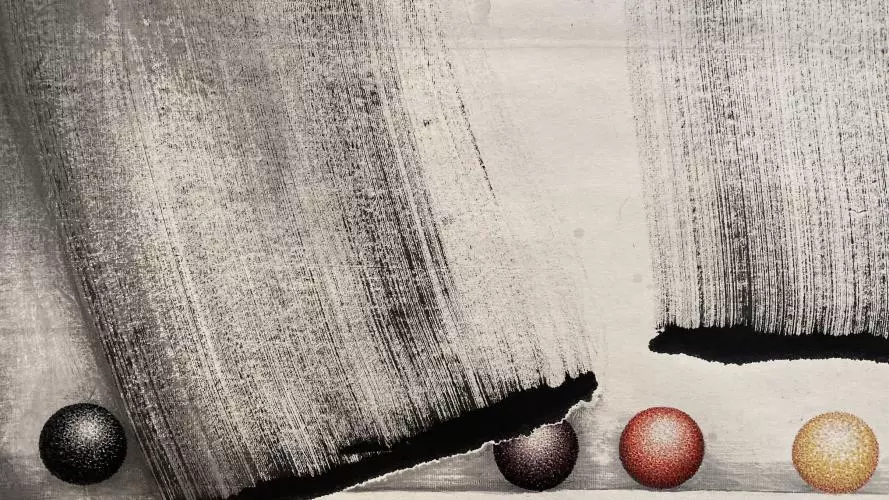
It is rare for an artist to paint her own brain. Yet Irene Chou (1924–2011), a leading Hong Kong ink painter, did just that. When confronted with the X-ray that confirmed her diagnosis of cerebellar atrophy, Chou saw her life inscribed within it: “I saw vital images of tree branches … that is life—my life.”
Her artistic engagement with trees had begun decades earlier. In the secluded forests of Hong Kong, she obsessively sketched “ten thousand trees,” a practice that became both a psychological necessity and a means of imposing order on overwhelming inner turmoil. Her later work connected these outward forms with the vascular and neural patterns revealed in medical images of her brain.
In this lecture, Eugene Wang presents Chou’s evolving practice as a compelling example of how cognitive art history can contribute to the New Humanities. Tracing how her art weaves together calligraphic lines, meditative breathing, memories of childhood, and modern brain scans, Wang shows how Chou moves beyond the myth of the self-contained Cartesian individual. Her paintings instead map a vibrant, relational self, in which the biological brain, technology, memory, landscape, and psychocosmic forces co-emerge. Cognitive art history, Wang argues, enables us to see how Chou transforms physical vulnerability and personal trauma into an affirmative vision of resilience, healing, and becoming.
This event is generously supported by June and Simon Li, valued friends and supporters of art history.