Archived HoA Research Seminars
2025
26 November 2025 Everywhen: Photography and Indigeneity Geoffrey Batchen Oakeshott Room, Lincoln College
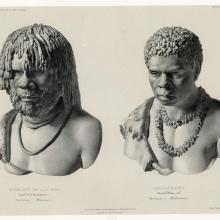
August-Hilaire Léveillé (lithographer, France), Worraddey, chef a l'ile Bruny, Canal de d'Entrecasteaux, Wan-Dieménie [sic] (Mélanésie) | Trouggarnanna, native de Sullivan-cove, Wan-Dieménie [sic] (Mélanésie) [Woureddy, chief of Bruny Island | Truganini], c. 1845
from Jules Dumont d'Urville, Voyage au pôle sud et dans l'Océanie. Part 2, anthropologie et physiologie humaine (Gide, Paris, 1842-47).
lithograph after daguerreotypes made by Louis-August Bisson in Paris of plaster casts of two sculptures made by Benjamin Law in Hobart in 1835-36.
22.0 x 16.0 cm (image)
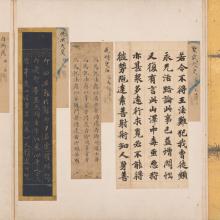
19 November 2025 The Natural History of Style: Specimens, Albums, and the History of Art in Early Modern Japan Kris Kersey Oakeshott Room, Lincoln College (Sponsored by the June and Simon Li Foundation)
12 November 2025 Art History and Projective Tests Whitney Davis Oakeshott Room, Lincoln College (Sponsored by the June and Simon Li Foundation)
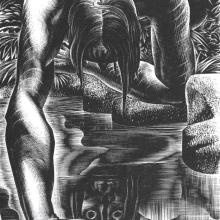
Between about 1920 and 1955, especially in the USA and Britain, pictures began to be used in a variety of 'projective tests', which became influential in medicine, education, industry, and government. Some tested for 'intelligence', personality factors, and 'unconscious' mental inclinations; some were used in psychodiagnostic contexts (e.g., in identifying schizophrenia); and some were used in psychotherapy. The most well known, the Thematic Apperception Test, used photographs from magazines and other sources as well as well-known works of European and American art (especially in Symbolist and Expressionist traditions) and/or specially commissioned artworks. Subjects usually provided a 'story' for the pictures, which was then interpreted or even 'scored' by a clinician, often in quasi-psychoanalytic terms. The lecture considers the contexts and stakes of this enterprise, comparing and contrasting art-historical approaches to the interpretation of (the very same) pictures by projective test procedures. What were the theoretical bases of projective testing, including aesthetic ideologies? What can art and cultural historians learn from projective tests--and vice versa?
11 November 2025 Critical (Ms.) Fortune: A Feminist History of the Italian Renaissance? Maria H. Loh (Princeton) Cinema, The Schwarzman Centre for the Humanities
5 November 2025 Monstrous Beauty: A Feminist Revision of Chinoiserie Iris Moon Oakeshott Room, Lincoln College (Sponsored by the June and Simon Li Foundation)
29 October 2025
Gold Rush, Congo Style: Gustav Klimt's Marble Mosaic Frieze in the Palais Stoclet Deborah Silverman Cinema, The Schwarzman Centre for the Humanities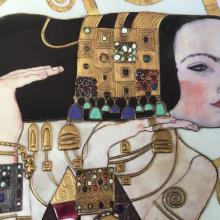
22 October 2025 Tudor Liveliness? Discovering Vividness in Post-Reformation England Dr Christina Faraday Cinema, The Schwarzman Centre for the Humanities
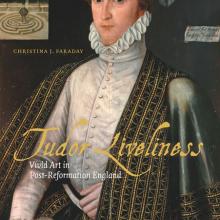
In Tudor England, artworks were often described as 'lively'. What did this mean in a culture where naturalism was an alien concept? And in a time of religious upheaval, when the misuse of images might lure the soul to hell, how could liveliness be a good thing? In this talk we'll explore a hitherto neglected aspect of Tudor art, re-enlivening the period's vivid visual and material culture and discovering how artists were able to make absent things present, and make the dead live.
2024
4 December 2024 Tigers & Dragons: Imagining India and Wales in (Post)Colonial Britain Dr Zehra Jumabhoy (University of Bristol) Lecture Theatre, History Faculty, George Street
What do the Indian Tiger and the Welsh Dragon share in common vis-à-vis the Lion of Britannia? If India was the Jewel in the Imperial Crown, could we argue that Wales was England's first colony? How should Britain deal with its colonial past, internal and external? As Wales struggles for its identity within 'British-ness', how should it acknowledge the way it contributed to, benefited from and, even, suffered for Britain's Imperial ambitions? This talk will consider these questions, in the context of a major exhibition, Tigers and Dragons: India and Wales in Britain, which will take place at the Glynn Vivian Art Gallery in Swansea from 23rd May to October in 2025. The curators argue that the Welsh involvement in Empire was often different to the larger British experience. Taking no sides politically, it seeks to join the dots between India and Wales, to explore Imperial connections as well as probe national equivalences between the 'Welsh' Dragon and 'Indian' Tiger. As an exhibition Tigers & Dragons has both a contemporary and historic element; spotlighting Wales-based practitioners alongside art from South Asia and its diasporas, serving as a platform for debates about 'British' heritage, decolonialisation and competing nationalisms. This talk will address some of the complexities of the conceptual issues that the show seeks to explore visually. It asks: Do the beleaguered red dragon of Wales and the subjugated 'Indian' Tiger continue to share common ground? Or have the '(post)colonial' tables have turned - in India's favour?
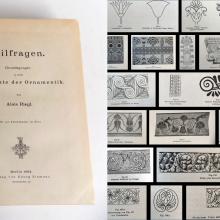
27 November 2024 Unraveling Stilfragen: Alois Riegl and the Crafting of Early Formalist Art History Dr Jesse Lockard (Corpus Christi College) & Prof Meekyung MacMurdie (University of Utah) Lecture Theatre, History Faculty, George Street
20 November 2024 Queering Medieval Art at the Met Cloisters, New York Prof Nancy Thebaut (St Catherine's College) Lecture Theatre, History Faculty, George Street
13 November 2024 Wedgwood's Model Colonies: Australian Clay, British Moulds, and the New Etruria Dr Brigid von Preussen (Associate Member, Faculty of History) Lecture Theatre, History Faculty, George Street
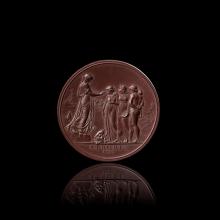
This talk uses the so-called 'Sydney Cove Medallion', made by Josiah Wedgwood's factory in 1789, to explore the claims and contradictions of British colonialism in Australia in the final decades of the eighteenth century. In Wedgwood's medallion, the very substance of the new colony - its land - became the medium for a classicised allegory of colonial endeavour. Australian clay was pressed into a British mould, just as the land of New South Wales was assumed to be 'virgin' territory, ready be imprinted with the image of the mother country, while the claims of its Aboriginal inhabitants were ignored. As I will show, the civilisation of ancient Etruria was envisioned as a model for the penal colony in Australia as well as for Wedgwood's factory in Staffordshire, creating an equivalence between the colonial project and the domestic manufacture of ceramics. I argue that in the Sydney Cove medallion, clay acts as both a medium and a metaphor linking ideas about agriculture, industry, civilisation, and the practice of art itself.
6 November 2024 Disobeying Arts and Crafts Studies Orthodoxy Thomas Cooper (Lincoln College) Lecture Theatre, History Faculty, George Street
What does it meant to describe someone as 'Arts and Crafts'? What does it mean to define craftspeople, designers, architects and theorists active the late-nineteenth and early-twentieth centuries as being members of, or associated with, the Arts and Crafts movement? I have these and other questions in mind as I discuss my research on the career and work of the artist, writer and teacher, May Morris (1862-1938). While Morris has been understood as a leading figure of the Arts and Crafts movement, in my current project I am consciously attempting to find an alternative way to think about and write a critical history of her career and work. In doing so, I am disobeying Arts and Crafts orthodoxy. But, by the same token, I am experimenting with ways of opening up the possibilities of what is known and sayable within Arts and Crafts scholarship.
30 October 2024 Thinking through Photographic Backgrounds & Staged Images of American History Prof Erin Pauwels (2024-2025 Terra Foundation Visiting Professor in American Art) Lecture Theatre, History Faculty, George Street
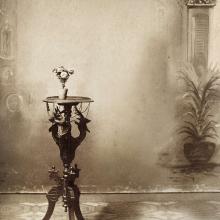
This lecture explores how the visual analysis of backgrounds, backdrops, and negative spaces in photographic compositions can reveal art's complicity in supporting American imperialism during the late nineteenth century. Applying this method to portraits of immigrants to the United States and Indigenous Peoples engaged in diplomatic relations with the US government demonstrates how photography operated as a public platform for asserting national identity and cultural sovereignty. It also shows how both subjects and photographers negotiated terms of self-representation through figure-ground relationships, reclaiming even posed and theatrically-constructed images as evidence of complex dynamics between power, identity, and agency in visual culture.
Image: Edwardsville, Illinois, from the series Absence Portraits. 2011, printed 2022. Lissa Rivera. Museum of Fine Arts, Houston.
24 October 2024 Unknotting Dürer's 'Jerome' Prof Alexander Marr (University of Cambridge) Lecture Theatre, History Faculty, George Street (A June and Simon Li Foundation Special Lecture)
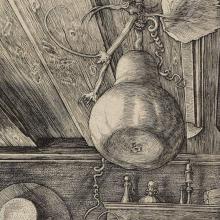
The pendulous gourd in Dürer's 'St Jerome in his Study' (1514) has long been an object of fascination and frustration for art historians. While most acknowledge that by including this bulbous fruit so prominently in the print Dürer intended it to have some special meaning, nobody can quite agree on what that meaning is. Interpretations have tended to be iconographical, drawing on sometimes obscure texts while largely ignoring the object's curious, virtuosic form. Focusing on that form and the internal logic of the image, this talk will explore how, in the St Jerome, Dürer tackled the knotty problems of representation, ornament and signification.
2023
28 November 2023 Carrie Mae Weems and the Afterlives of Images: A Visual Correspondence Tina M. Campt Lecture Theatre, History Faculty, George Street (Sponsored by the June and Simon Li Foundation)
This talk explores the unique forms of visual and sonic correspondence found in the work of one of the preeminent contemporary artists of her generation: Carrie Mae Weems. It explores her engagement with the Black body - both her own, as well as mundane and iconic media figurations of it - as a bridge of contact and commemoration between artist and audience, individual and collective, and the living and departed. Examining a selection of her most recent works, the talk asks us to consider how Black artists remake and resuscitate images as a conduit of connection that force us to grapple simultaneously with the converging temporalities of Black subjection and Black possibility.
22 November 2023 Reading big significance into a small decorative effort: Steps towards a history of modern British craft Imogen Hart Lecture Theatre, History Faculty, George Street
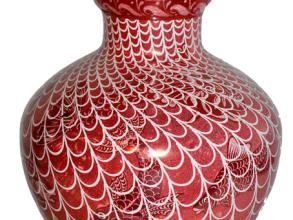
William De Morgan, lustre-glazed earthenware vase, 1872-1907, The De Morgan Foundation
15 November 2023 'Balkan Baroque,' Revisited Dr Marko Ilić Lecture Theatre, History Faculty, George Street

8 November 2023 Journeys for Colour: British Orientalism and the Victorian Colour Revolution Madeline Hewitson Lecture Theatre, History Faculty, George Street
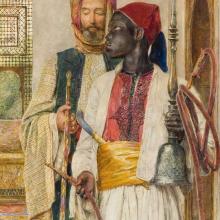
John Frederick Lewis, The Pipe Bearer, 1856, Birmingham Museum Trust
1 November 2023 Why Do We Need to Reimagine Modernism? The Centre-Periphery Problem in the History of Modernist Art Partha Mitter Lecture Theatre, History Faculty, George Street
The heterogeneous character of contemporary global art practices has given rise to anxiety about the end of art history as a grand Hegelian narrative. The constant merry-go-round of international biennales, art fairs and auctions, where select artists from the peripheries are trumpeted as evidence that the modernist art of the West, and the Rest of the World, now share certain common values. As my talk will argue, rather than being universal, these values are in fact the product of the western modernism and its special claims to universality.
25 October 2023 Voicing the Archive Marysia Lewandowska Lecture Theatre, History Faculty, George Street
Tender Museum, Muzeum Sztuki Łódź 2009
Considering the role of the archive as a tool helps to address the relationships between people, their ideas and things that survived the dispersal and fragmentation associated with the passage of time. The aim of my research-based projects must be in part to keep insisting on what is present and what can be presented, to think about the present as a process of emergence captured in a distinct moment of attention. This seems especially relevant when tracing women's cultural contributions and difficulties associated with finding their material evidence. One of the ongoing preoccupations of my practice lies in the interrogation of voice and voicing understood in its wider sense as contribution and political agency. Confronting absence, void, erasure or silence often acts as a catalyst for constructing an artwork, demanding that it performs a corrective intervention in the process of re-visiting histories now. The value of documents encountered in the process of research lies not only in what they record or reveal but more importantly in understanding the cultural circumstances of the decades which produced them. I tend to treat sound and voice as agents in contemporary manifestations of political imaginary deployed through listening and feedback. This is consistent with my long-term commitment to investigating the role women's voices continue to play in diverse social contexts. The tactics associated with my practice urge audiences to re-discover and re-arrange the internal "structures of feeling" in which archival knowledge, material traces, artistic expression and open access have all been given a chance to cross-pollinate and to be heard.
Image: Tender Museum, Muzeum Sztuki Łódź 2009
2022
26 November 2022 The Sky Is Falling: Ambition and Hubris in the Early Modern Sky Professor Maria H. Loh (Hunter College) Mary Sunley Lecture Theatre, St Catherine's College (Sponsored by the June and Simon Li Foundation)
9 November 2022 Undetectability: Scott Burton, Public Art, and Visibility in the First Decade of the AIDS Crisis David J. Getsy (University of Virginia, Charlottesville) Lecture Theatre, History Faculty, George Street (Sponsored by the June and Simon Li Foundation)
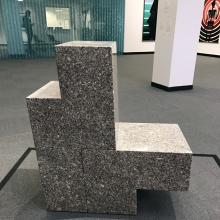
Scott Burton was one of the most well-known proponents of the new public art in the United States in the 1980s, and his work involved making site-specific sculptures of furniture that anonymously served the passerby. These seemingly innocuous functional artworks, however, were based in Burton's long-running investigation into the queer experiences of public behavior, cruising, BDSM, and tactical dissemblance. Burton's sculptures hide in plain sight, and this talk will examine their undetectability in the context of the first decade of the on-going AIDS crisis. Burton's sculpture was both materially and conceptually tied up with the cultural battles over representation and contagion, and his works allow for an alternate account of the visibility politics that tend to dominate histories of AIDS and queer art in the 1980s. Burton's contribution, Getsy will argue, was his reimagining of sculpture's long-standing associations with embodiment and the figure through his sculptures' self-abnegation, practice of support, and facilitation of contact-both physical and social.
15 June 2022 Iberian Exchanges: Editing Art and Artists between Iberian and Global Geographies, 1450-1550 Dr Costanza Beltrami and Sylvia Alvares-Correa Lecture Theatre, History Faculty, George Street
This presentation explores the main questions which emerged in the process of editing the volume Art and Artists between Iberian and Global Geographies, 1450-1550. Featuring authors from seven different countries, the collection aims to refashion the geography and chronology of artistic exchange in the Late Medieval and Renaissance periods. Focusing on the Iberian world-defined as both the Peninsula and Portugal and Spain's overseas territories-the volume demonstrates the historical and theoretical importance of this long-marginalized region. Ranging from Sardinia to Madeira, Antwerp to Potosí, the chapters collected here construct a complex image of contacts moving in and out, north and south, east and west of the Peninsula. Several media and geographies are interwoven to create a rich tapestry held together by the concept of 'itinerant' artworks, artists and ideas. The essays challenge paradigms of centre and periphery, medieval and modern, local and migrant.
Yet the process of editing the volume poses difficult questions. Are the artists and objects discussed in the essays 'hybrids'? To what extent was medieval Iberia a geographical and artistic unit? How can exchanges between Iberian possessions be conceptualised if they bypassed the Peninsula itself? Was artistic exchange in this period different from that which preceded and followed it? Does our sense of 1492 as a moment of global chronological rupture need to be nuanced? In this presentation, the editors will propose some working answers developed in the volume's Introduction.
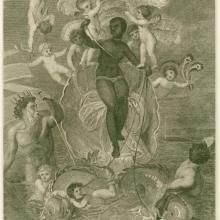
8 June 2022 A Frame for Thomas Stothard's Voyage of the Sable Venus (1794) Prof Cora Gilroy-Ware (Department of History of Art, University of Oxford) Auditorium, St John's College