

'Discontinued' Exhibition
‘Discontinued’ at OVADA, March 2026
By Céline Denis, History of Art
A few weeks ago, I was given the opportunity to make my curatorial debut, working alongside a group of seven Ruskin artists to put on ‘Discontinued’ at OVADA gallery on Osney Lane. The exhibition brought together the distinct multimedia practices of Phoebe Birch, Lillian Tagg, Naia Searight, Charlie Pellow, Ben Adams, Eimear White, and Vita Sunshine-Bannister, not only showcasing their talents, but also providing some insight into what the contemporary art world is about to look like. We had a significant turnout on opening night, including a board member of the Ruskin’s trustees, as well as many friends, peers, and artists. All things considered, it was a success.
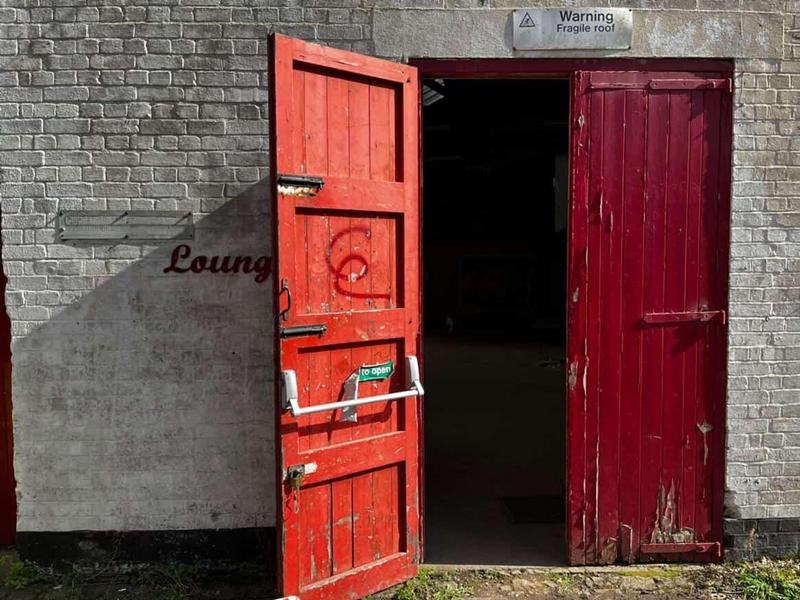
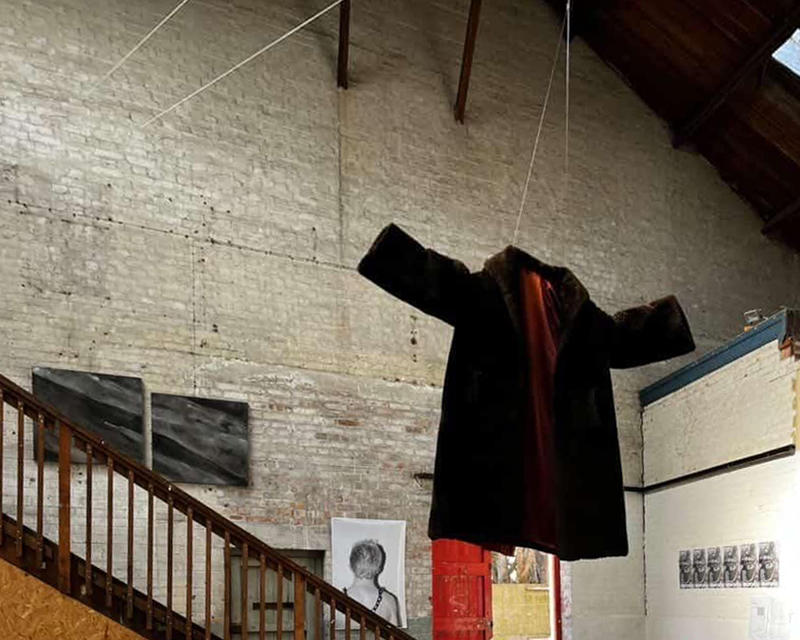
The exhibition was still evolving up until doors opened, and ended up taking three days to install. Initially, our focus lay in the closure of nightlife spaces in Oxford and its subsequent impact on the local queer community – fitting, then, that my friend and founder of the collective Phoebe proposed the project to me in a nightclub over Christmas. By the end of installation, this became more of an atmosphere than a visual motif, being evoked through the relationship of artworks to each other and the experience of walking between them, rather than by any explicit imagery we had on display. The breadth of practices was a real strength of the show, utilising every corner of OVADA (which is essentially a warehouse) to present hanging textiles, polished steel, analogue and digital film, sculpture, painting, print, and even a suspended fur coat. Each work held its own such that none ran the risk of being overshadowed, which allowed us to get truly experimental with the exhibition’s design. This being said, though there was heavy deliberation over ‘sightlines’, ‘beholder experience’, ‘White Cube aesthetics’ and other such buzzwords, most of the challenges we faced were practical rather than curatorial.
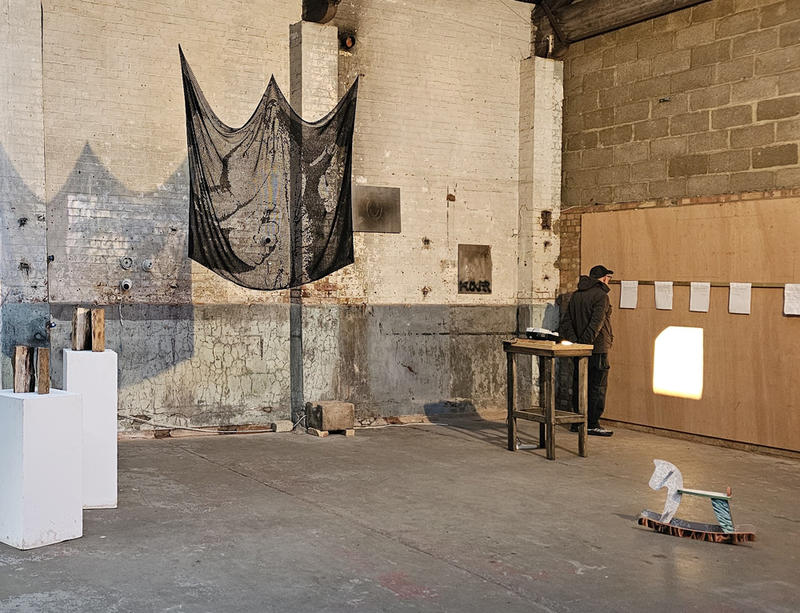
As one would expect, curating for a brand-new collective of seven young artists with a limited budget is vastly different to the theoretical curating discussed in department lectures. In fact, the work this show necessitated easily comes under ‘Curating in Extreme Conditions’ – a real module I could be taking in my Curating MA programme this autumn. The building has been suffering from a severe leak for some time now, largely at the hands of the landlord (my own college, which I perhaps should not have revealed at a community meeting the week before), and naturally, this was a big concern for us. As well as navigating around the wide, ‘Shibboleth’-esque cracks in the floor, it meant certain walls could not be drilled into, and works were constantly at risk of water damage. The concept of temperature control was no more available for artworks than it was for visitors, thus opening night had a very ‘coats on’ dress code. Due to the nature of the space, the role of ‘Curator’ quickly expanded to deal with insurance, ‘working at height’ certifications, contract reviewing, applying for funding, health and safety, furniture removal, reviewing electrical hazards, bartending, and aiding the actual installation of works, which proved particularly challenging when figuring out how best to hang pieces some 6 metres in the air (a tennis ball and fishing wire, we discovered.)
Within the art world, it’s fairly common knowledge that this is the deal you will be handed as a junior curator, and it is undeniable that ‘Discontinued’ has grounded my academic study in practical application. That said, what the show has ultimately taught me is that the two are not as separate as one would expect, even at a very amateur level. It is easy to feel that the writings of Susan Sontag and Carol Duncan, both great influences of mine, only become relevant in the context of heavyweight art institutions with hidden agendas. What actually seems to be the case is that their work articulates the instinctive, subconscious decisions made in exhibition design, and that an awareness of their theory allows you as a curator to make more informed choices. I was delighted by how a review from Industry magazine described the show, saying, “I saw it in the way we make space for each other on the pavement, cross the road in parallel, step over the same grey puddles and let the same cigarette butts blow past our feet.” For one, this was fantastic marketing, but more importantly, I felt for the first time that it was possible to present art on a personal, visceral level, rather than on a pedestal. It felt like an achievement for my academic career, but also in my personal philosophy of what curating can look like. In the words of Sontag, "What is important now is to recover our senses. We must learn to see more, to hear more, to feel more."
All photos by Céline Denis

